Osage Orange at a Glance
Features of the tree described in words. Original photographs have not been added yet.
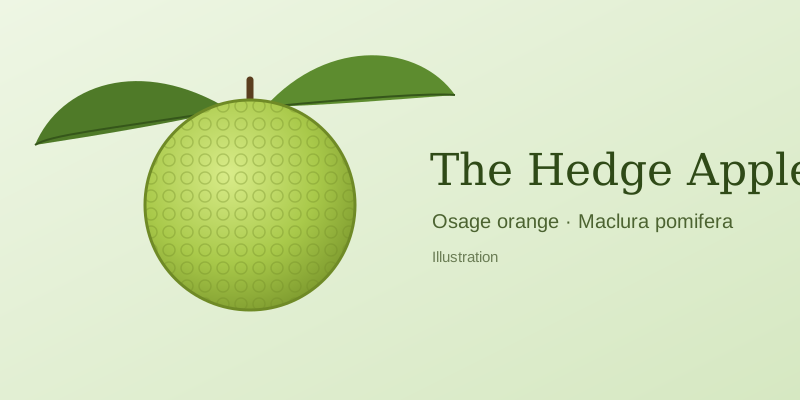
A mature Osage orange (Maclura pomifera) tree in late summer, showing the characteristic deeply furrowed orange-brown bark and dense canopy typical of established specimens.
Close-up of an Osage orange fruit in peak fall ripeness, showing the distinctive wrinkled yellow-green surface texture and the milky white sap visible at the stem attachment point.
Cross-section of a freshly cut Osage orange branch revealing the vivid yellow-orange heartwood that gives the tree its common name and darkens to a rich amber-brown over time when exposed to light.
A traditional Osage orange longbow crafted from a single stave of Maclura pomifera wood, showing the natural grain pattern prized by traditional bow-makers for its combination of strength and flexibility.
An old-growth Osage orange hedgerow along a Great Plains farmstead, a remnant of the extensive living fences planted across the Great Plains in the 1850s through 1880s before barbed wire replaced them.
Osage orange leaves in early spring showing the alternate oval form with tapered tips and the slightly glossy surface; the milky sap at the broken leaf stem base is a key identification feature.
A collection of seasoned Osage orange fence posts, showing the natural resistance to ground contact and decay that makes this one of the most durable domestic fence post timbers in North America.
Osage orange seeds extracted from a mature fruit; the seeds are edible and reported to have a mild nutty flavor, unlike the unpalatable fruit flesh that surrounds them.
A fall scene showing Osage orange fruits fallen beneath a female tree; a single mature female tree can drop dozens of fruits per season, each roughly 3–5 inches across.